
Ecommerce Returns Management: The Small Brand’s Complete Guide
Apr 25, 2026 | Dustin Brearton
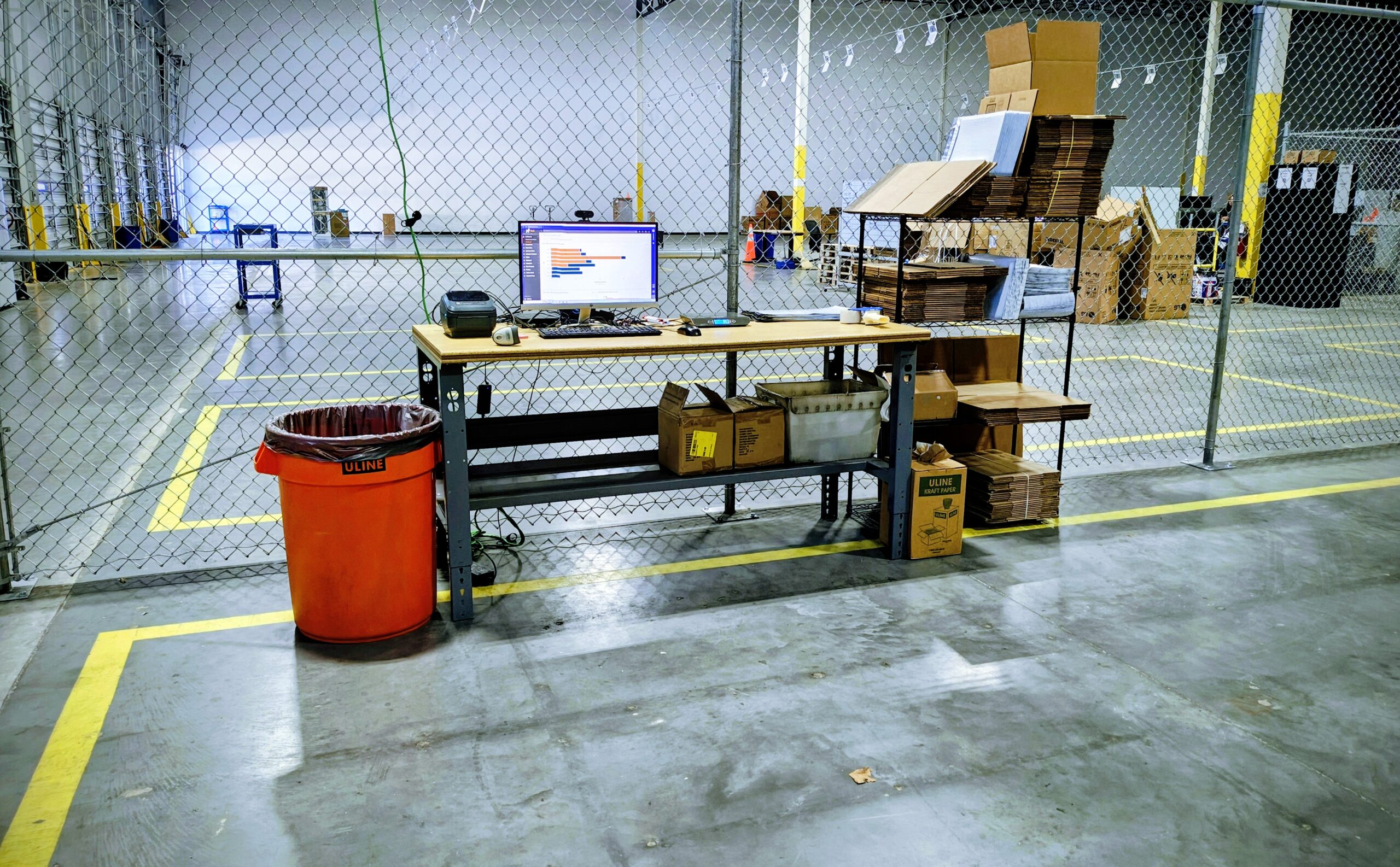
Ecommerce returns management is the silent killer of small DTC brands. Outbound fulfillment is glamorous — nice packaging, unboxing videos, marketing photos. Returns are the opposite: messy, slow, expensive, and the fastest way to burn a customer’s trust if you handle them badly. But returns are also the single biggest untapped loyalty lever most small brands have, because how you handle a return is the moment a customer decides whether to ever buy from you again.
This guide covers what ecommerce returns management really involves, the true cost of a return, the five phases every return goes through, what to automate, what to measure, and how the right fulfillment partner turns returns from a cost center into a retention engine. If you’re running a DTC brand shipping 100 to 5,000 orders a month, this is written for you.
Why Ecommerce Returns Management Makes or Breaks Small Brands
Return rates for online retail sit between 15% and 30% depending on category, with apparel and footwear at the high end and electronics on the low end. For a brand doing 1,000 orders a month at a 20% return rate, that’s 200 returns to process every month — 2,400 a year. How you handle ecommerce returns management isn’t a minor ops detail. It’s a core business process.
Here’s what happens to a brand with bad returns management:
- Refunds go out slowly. Customers file chargebacks. Your card processor flags you.
- Returned inventory sits in a pile. Your counts in Shopify drift from reality.
- You oversell. You issue apology emails. You refund orders you could have shipped.
- Returns accumulate in a warehouse corner and your 3PL quietly starts charging storage fees on them.
- Damaged goods get restocked by mistake. Customer #2 gets the broken item Customer #1 returned.
- Your support team spends 40% of its time answering “where’s my refund?” emails.
And here’s what happens with good ecommerce returns management:
- Customers get refunds fast — often before they’ve thought to ask.
- They write reviews that mention “easy returns,” a proven repeat-purchase driver.
- Inventory gets restocked quickly and accurately, so you can resell within days.
- You learn which SKUs have abnormal return rates and can fix the product, the size chart, or the copy.
- You reduce refund fraud because damaged or incomplete returns are caught at inspection.
The True Cost of a Return (Beyond the Refund)
The refund itself is the most visible cost of a return, but it’s rarely the biggest. The full picture looks like this:
- Reverse shipping cost — whoever pays for the return label (often you).
- Inspection labor — someone opens the package, checks the item, determines condition.
- Restocking labor — resellable items have to be put back in the right bin.
- Disposal cost — damaged items cost money to dispose of or write off.
- Product depreciation — even undamaged returns lose value, since they can’t be sold as “new.”
- Customer service time — answering questions, issuing refunds, resolving disputes.
- Processor fees — card processors typically don’t return the original transaction fee on a refund.
- Lost repurchase — a bad returns experience reduces customer lifetime value.
Industry estimates put the all-in cost of a $100 return at $20–$30. For a small brand, even modest improvements in ecommerce returns management — faster processing, cleaner inspection, better data — compound quickly into margin and customer retention.
The Five Phases of Ecommerce Returns Management
1. Customer-Initiated Return (RMA)
The customer decides to return. They click a link in their confirmation email, fill out a form on your site, or email you directly. A good process gives them a return label instantly and an expected refund window. A bad one makes them wait 48 hours for a response and generates a support ticket that drags on for a week.
2. Return in Transit
The package ships back to you (or your 3PL). Ideally, the customer gets visibility: tracking updates, estimated arrival, and a clear statement of when the refund will issue relative to receipt. Silence is the enemy — customers who don’t see progress assume you lost the package.
3. Inspection and Disposition
The package arrives. Someone opens it, checks the item, and decides: resellable, damaged, wrong item, or missing. This phase is where ecommerce returns management separates good 3PLs from bad ones. A good 3PL photographs questionable returns, records the decision, and flags patterns — a SKU with a 40% damaged-on-return rate has a product problem you need to know about.
4. Restock, Repair, or Dispose
Based on inspection, the item goes somewhere:
- Restock: back in the bin, inventory count updated, available to resell.
- Repair or refurbish: routed to a repair station if you offer refurbished product.
- Liquidate or donate: for items you can’t resell as new.
- Dispose: damaged beyond use, recorded as a write-off for accounting.
5. Refund and Insight Loop
The customer gets their refund. Your systems update — inventory restocked in Shopify, accounting records the refund, customer service closes the case. And critically, the data from this return feeds a loop: which SKUs get returned most? Which reasons dominate? Which customers return most often? Without this feedback, you’re running ecommerce returns management blind.
What to Automate (and What Not To)
Small brands often either over-automate (firing off refunds before inspection, inviting fraud) or under-automate (everything manual, everything slow). Here’s the balance that works:
Automate these:
- Return label generation the moment the customer requests a return
- Customer-facing tracking and status updates
- Inventory sync the moment an item is restocked
- Refund issuance once a return is marked received and in acceptable condition
- Data capture: reason codes, SKU-level return rates, disposition outcomes
Keep a human in the loop for these:
- Inspection — condition and disposition should be decided by a person, not an algorithm
- High-value or atypical returns — always worth a manual review
- Fraud-flagged returns — repeated returners, serial-returner patterns
- Policy exceptions — loyal customers worth extending the return window for
Key Metrics Every Small Brand Should Track
If you don’t measure your returns, you can’t improve them. These five metrics are the baseline:
| Metric | Why It Matters | Good Benchmark |
|---|---|---|
| Return rate | Top-line health of your catalog and sizing | 15–25% apparel, <10% non-apparel |
| Time to refund | Directly drives CS volume and chargebacks | Under 72 hours from receipt |
| Restock rate | How much returned inventory you recover | >70% resellable |
| Repeat return rate | Flags fraud and serial returners | Single-digit % of returners |
| Return reason mix | Tells you what product/copy to fix | No single reason over 40% |
How the Right 3PL Transforms Ecommerce Returns Management
Most small brands assume ecommerce returns management is their problem and the 3PL only handles outbound. That’s historically been true — and it’s also why returns are where most 3PL relationships quietly fall apart. A 3PL built for small brands should own the returns workflow end-to-end.
At On-Demand Warehousing and Fulfillment, our returns management platform:
- Generates return labels on demand via API or a customer-facing form
- Tracks every inbound return from carrier scan through inspection
- Photographs and records disposition for every questionable item
- Pushes restocked inventory back into your cart in real time
- Issues refunds via your cart system once receipt and condition are confirmed
- Produces reporting so you see which SKUs, reasons, and channels drive returns
This isn’t a feature we bolted on. Returns management was the original problem we built our platform to solve — we started with a returns portal before we expanded into outbound fulfillment, which means returns are genuinely first-class, not an afterthought. For a broader view of what separates a small-brand-first 3PL from the enterprise crowd, see our guide to picking a 3PL for small brands.
How to Reduce Your Return Rate (Without Hurting Sales)
Good ecommerce returns management catches problems after they happen. Great ecommerce returns management reduces the number of returns that happen in the first place. The levers:
- Better size charts. Apparel returns are dominated by “didn’t fit.” More precise, brand-specific size guidance reduces size-driven returns dramatically.
- Better product photography. Multiple angles, scale references, on-model when relevant. Most “not as pictured” returns are avoidable at the PDP.
- Better descriptions. Materials, weight, dimensions, care instructions. Anything a customer might get wrong is a future return.
- Published return reason data. Use reason codes to identify SKUs with product-level issues. Fix the product, not the policy.
- Exchange-first returns. Offering an easy exchange (different size or color) before a refund preserves revenue and keeps the customer engaged.
Frequently Asked Questions
What’s a typical return rate for a small DTC brand?
15–20% for apparel, 8–12% for non-apparel consumer goods, 5–8% for consumables. Your actual rate depends on category, price point, and size-chart accuracy.
Should I offer free returns?
It depends on your category and margin. Free returns increase conversion but also increase return rate. Most successful small brands offer free returns within a short window (14 days) and charge after, or free only on first purchase.
How long should I take to issue refunds?
Best-in-class is under 72 hours from receipt. Anything over 7 days generates customer-service emails and risks chargebacks.
How do I reduce returns without hurting sales?
Better size charts, better product photography, better descriptions, and published return-reason data so you can see which SKUs have product-level issues. Most returns are avoidable at the product detail page.
What’s the difference between a return and an exchange?
A return refunds the customer. An exchange swaps for a different SKU (typically different size or color). Exchanges preserve revenue but require more operational complexity.
How do returns affect my inventory counts?
If your 3PL restocks returns in real time into your cart, inventory stays accurate. If restocking is batched weekly, your cart will oversell restocked units and delayed units create a phantom-inventory problem.
Can I handle returns myself and only outsource outbound?
You can, but it’s typically a false economy for small brands. Returns require the same warehouse space, labor, and systems as outbound — splitting the workflow means running two operations and two sets of headaches.
What about international returns?
International returns are expensive and complicated. Most small brands either use a returns consolidator, offer store credit instead of refunds, or charge the customer for return shipping. Talk to your 3PL about what’s supported before you expand internationally.
Do I need a dedicated returns app like Loop or Returnly?
If your 3PL’s returns platform already covers label generation, tracking, inspection, and inventory sync, a dedicated returns app is often redundant. Returns apps shine when your 3PL’s returns capabilities are thin and you need a software layer to fill the gap.
Ready to Fix Your Ecommerce Returns Management?
If returns are eating your margin, your time, or your customer relationships, let’s talk. We built our returns management platform specifically for small brands, and it’s the most frequently praised part of working with us.
Ecommerce returns management isn’t a cost center — it’s a retention engine, if you run it right. Let’s see if we can help you get there.